







Stretching is a simple yet powerful activity that can enhance your overall physical health and well-being. Whether you’re looking to improve flexibility, reduce muscle tension, or simply relax after a long day, incorporating stretching into your daily routine at home is an excellent choice. This beginner’s guide will walk you through the basics of stretching, why it’s important, and how to get started safely and effectively.
Why Stretching Matters
Stretching helps lengthen your muscles and tendons, promoting better movement and reducing the risk of injury. It also improves blood flow, which can aid in recovery after exercise or relieve stiffness caused by prolonged sitting. Regular stretching encourages better posture and can provide a calming effect on the mind, making it a great addition to any wellness routine.
Types of Stretching
Before diving into your routine, it’s helpful to understand the main types of stretching:
– Static Stretching: Holding a stretch for 15-60 seconds without movement. Ideal for improving flexibility.
– Dynamic Stretching: Moving parts of your body through a full range of motion with controlled movements, often used as a warm-up.
– Ballistic Stretching: Involves bouncing to push your body beyond its normal range. This is not recommended for beginners as it can cause injury.
– PNF (Proprioceptive Neuromuscular Facilitation): Advanced technique involving contracting and relaxing muscles. Usually guided by a professional.
For beginners, static and dynamic stretching are the safest and most effective choices.
Preparing to Stretch at Home
Choose a Comfortable Space
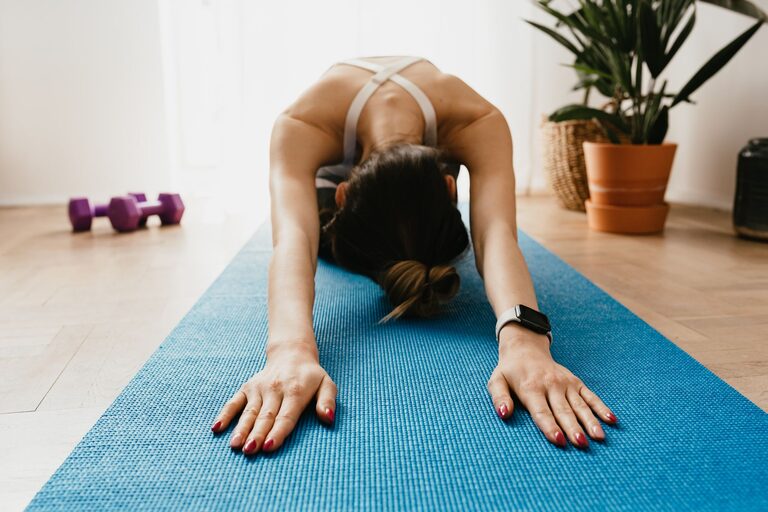
Find a quiet, open area where you can move freely without obstacles. A yoga mat or carpeted floor adds comfort and support.
Dress Comfortably
Wear loose, breathable clothing that allows full range of motion without restriction.
Warm Up Your Body
Although stretching itself is gentle, warming up your muscles with light activity like walking in place or marching for 3-5 minutes helps prevent strain.
Basic Stretching Routine for Beginners
Here is a simple routine that targets major muscle groups. Hold each static stretch for about 20-30 seconds and repeat 2-3 times on each side when applicable.
1. Neck Stretch
– Sit or stand upright.
– Slowly tilt your head to the right, bringing your ear toward your shoulder.
– Use your hand to gently deepen the stretch if comfortable.
– Switch sides.
2. Shoulder Stretch
– Bring your right arm across your chest.
– Use your left hand to hold your right arm close to your chest.
– Feel the stretch across your shoulder and upper back.
– Switch arms.
3. Triceps Stretch
– Raise your right arm overhead and bend the elbow so your hand reaches down your back.
– Use your left hand to gently push your right elbow.
– Switch arms.
4. Chest Stretch
– Clasp your hands behind your back.
– Straighten your arms and lift your chest while squeezing your shoulder blades together.
5. Cat-Cow Stretch (Dynamic)
– On all fours, inhale as you arch your back, lifting your head and tailbone (Cow Pose).
– Exhale as you round your spine, tucking your chin and tailbone (Cat Pose).
– Repeat for 5-8 breaths.
6. Seated Forward Bend
– Sit with legs extended.
– Hinge at your hips and reach toward your toes.
– Keep your back straight, bending only as far as comfortable.
7. Hamstring Stretch
– Lie on your back.
– Lift your right leg, holding the back of your thigh or calf.
– Keep the left leg bent or straight on the floor.
– Switch legs.
8. Quadriceps Stretch
– Stand and hold onto a chair or wall for balance.
– Grab your right ankle and gently pull your heel toward your buttocks.
– Keep knees close together.
– Switch legs.
9. Calf Stretch
– Stand facing a wall.
– Place your hands on the wall and step one foot back.
– Keep the back heel on the floor and lean forward slightly.
– Switch sides.
Tips for Safe Stretching
– Don’t bounce: Avoid jerky movements to prevent muscle strain.
– Breathe deeply: Inhale and exhale steadily to help muscles relax.
– Listen to your body: Stretch only to the point of mild tension, not pain.
– Be consistent: Aim to stretch 3-5 times a week for best results.
– Hydrate: Drink water before and after stretching to keep muscles hydrated.
When to Stretch
You can stretch anytime during the day, but some ideal moments include:
– After waking up, to loosen stiff muscles
– Before and after exercise, to prepare and recover muscles
– During breaks from sitting to relieve tension
– Before bed, to promote relaxation and better sleep quality
Additional Resources for Beginners
If you’d like to explore further, consider:
– Following beginner stretching videos on platforms like YouTube.
– Trying yoga or Pilates classes which incorporate stretching.
– Using apps that provide guided stretching routines.
Final Thoughts
Stretching at home is a convenient, low-cost way to improve your physical health and mental well-being. With just a few minutes a day, you can enhance your flexibility, reduce muscle stiffness, and feel more relaxed. Remember to start slowly, be patient with your progress, and enjoy the calming benefits that stretching offers.
Happy stretching!